Postingan

Boosting developer success on Google Play

Gambar
Posted by Sameer Samat, VP, Product Management Helping developers build sustainable businesses is a core part of Google Play’s mission. We work with partners every day to understand the challenges they face and help them bring their innovative ideas to life. Getting a new app off the ground and into orbit is not easy! To aid their quest for growth we provide a broad range of support, from powerful marketing tools and actionable data in the Play Console , education via Play Academy , "> best practices and thought leadership resources, programs such as the Indie Games Festival , Indie Corner , and accelerator programs around the world. We’re always looking for new ways to give them an added boost. Starting on July 1, 2021 we are reducing the service fee Google Play receives when a developer sells digital goods or services to 15% for the first $1M (USD) of revenue every developer earns each year. With this change, 99% of developers globally that sell digital goods and servic...
Creating custom Tiles on Wear OS by Google with the Jetpack Tiles library

Gambar
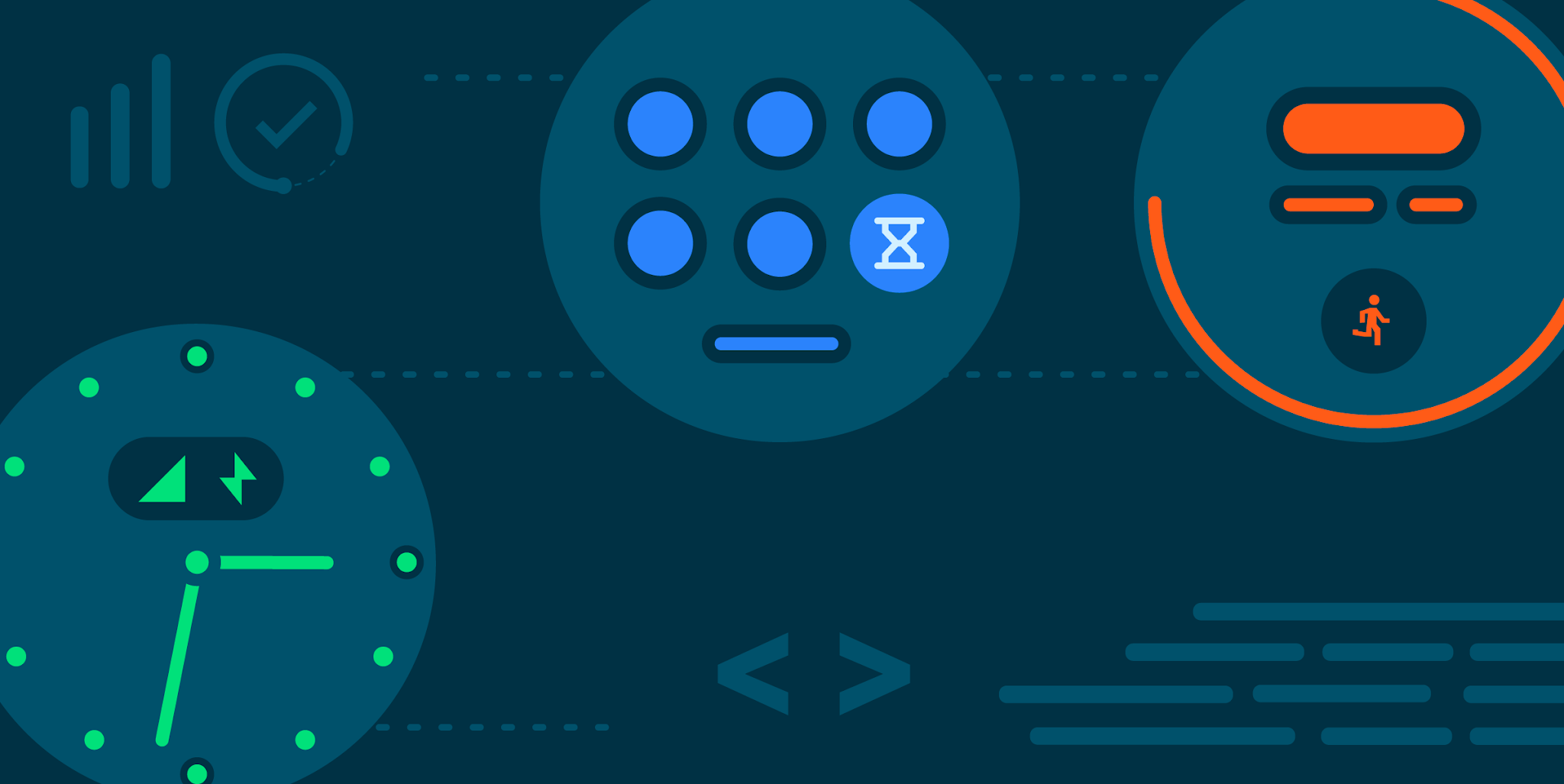
Posted by Jolanda Verhoef , Developer Relations Engineer We introduced Tiles in 2019 , and since then, Tiles have become one of the most helpful and useful features on Wear OS by Google smartwatches. They are fast to access, convenient, and designed to provide users with swipeable access to the things they need to know and get done right from their wrist. This also gives users control over what information and actions they want to see. Today, we're excited to announce that the Jetpack Tiles library is in alpha. This library enables developers to create custom Tiles on Wear OS smartwatches. These custom Tiles will become available to users later this Spring when we roll out the corresponding Wear OS platform update. Tiles can be designed for many use cases, like tracking the user’s daily activity progress, quick-starting a workout, starting a recently played song, or sending a message to a favorite contact. While apps can be immersive, Tiles are fast-loading and focus on the user...

Android Dev Challenge: Week 3 - Speed round

Gambar
Posted by Jolanda Verhoef , Developer Relations Engineer On your marks...Get set… Wait a second! Save the date for the third week of the #AndroidDevChallenge ! On March 13th , compete with other developers in your time zone; the fastest Compose skills wins! We loved all the creative submissions of week #1 and #2, but now we’re looking for speed. Here’s your challenge: Week #3 - Speed round 🏎 Be the fastest to implement a set of designs provided by us. The designs will be posted here when the challenge starts. Submit your entry* as soon as you finish implementing the designs. We’ll post different designs at 3 different times on the 13th: APAC-friendly: opens at 9AM UTC+8 EMEA-friendly: opens at 9AM UTC Americas-friendly : opens at 9AM UTC-8 We’ll update this blog post at the beginning of each round with the link to the designs. Your UI must be fully built in Compose, and strictly match all the guidelines specified in the designs. To help you with the implementation, check out the Co...

An update on Android's audio latency

Gambar
Posted by Don Turner - Android Developer Relations Engineer This article takes a look at what's changed in the Android ecosystem for audio developers recently, the audio latency of popular Android devices, and discusses Android's suitability for real-time audio apps. What's changed? Over the past four years we have taken a number of actions that have improved audio latency. Latency reduction These actions, coupled with a renewed focus from device manufacturers on audio latency, have led to significant improvements in the device ecosystem. The average latency of the most popular Android phones has dropped to under 40ms, which is well within the range required for real-time applications. device popularity source: appbrain.com Greater consistency Digging into the data we can see that in 2017 there was a significant difference between the highest and lowest values (222ms). device popularity source: appbrain.com Compare that to the data for 2021. The range has reduced by a facto...

Sub-dollar pricing expansion in 20 markets

Gambar
Posted by Neethi Thomas, Dafna Gal and Ashnil Dixit, Google Play At Google Play, we’re committed to giving Android developers access to the largest possible market for your apps and games. Google Play already supports free and paid apps in over 165 markets. We had previously lowered minimum prices developers can set for their products for 20 markets like India and Brazil. Today, we’re happy to announce that we have reduced the minimum price limit for products in 20 more markets across Latin America, EMEA, and APAC. With these new lower limits, you can now set prices in the range of 10-30 cents US equivalent in most of these markets. These ultra-low price points, or “sub-dollar” prices, allow you to reach new potential buyers by adjusting your pricing to better reflect local purchasing power and demand. It also gives you more flexibility to set your global pricing strategy and gives more users the opportunity to enjoy monetized experiences in your apps and games. The minimum price limi...

Android Dev Challenge: Week 2 - Countdown timer

Gambar
Posted by Florina Muntenescu , Developer Relations Engineer 3...2...1… Time for another challenge! Welcome to the second week of the #AndroidDevChallenge ! We loved seeing your creative submissions in week #1 so we can’t wait to see what you’ll build in week #2. Here’s your challenge: Week #2 - Countdown timer ⏲️ Create a working, single screen countdown timer. You have until March 9th, 23:59 PST to submit your entry . 1 Your UI must be fully built in Compose. To help you with the implementation, check out the Compose documentation on state and animation . For some hands-on learning try out the Compose pathway , with codelabs covering several topics useful for completing this challenge. Your solution must be implemented in a GitHub repository. Make a copy of this Github repository template and follow the instructions in the README. The template contains a basic Hello World! in Compose and a continuous integration setup. This week’s prize: a Compose poster pack! Our second week...

Google Play Console powers better strategic decisions with new engagement metrics and unique benchmarks

Gambar
Posted by Tom Grinsted, Product Manager, Google Play Today in Google Play Console, we’ve launched a suite of new metrics* and unique comparative benchmarks. Using these, you can evaluate your app or games’ engagement and monetization trends against up to 250 different peersets, helping you make better, more informed decisions about your product roadmaps and opportunities. Whether you want to prioritize new features to drive engagement, experiment with pricing, or drive up retention, we hear from all developers that they need great data and insights to help make the best investments. While some larger developers can compare data from across their portfolios, this isn’t always possible — for instance, when entering a new territory, if you don’t publish directly comparable apps, or if you only publish one or two games in the first place. In these types of cases, how do you know if your app or game’s performance is good and where you can be better? With this launch, we’re here to help al...

Android Auto Apps Powered by Jetpack

Gambar
Posted by Eric Bahna, Product Manager In January, we enabled the Google Play Store to accept open testing submissions of navigation, parking, and charging apps. It’s great to see many of you developing Android Auto apps and sending us feedback through the issue tracker. Thank you for helping us improve the platform so we deliver better in-car experiences together! Drivers have been sending positive feedback, too, as new apps launch to open testing, like Chargemap. Chargemap in Android Auto Today, we’ve reached the next milestone: the Android for Cars App Library is available in Jetpack as androidx.car.app 1.0.0-beta01 ! The move to Jetpack makes the library open source, gives you more visibility into our feature development, and provides API consistency with other Jetpack libraries. We’ve updated the developer guide and design guidelines to cover androidx.car.app . Test your app with Android Auto 6.1, or later, then you can publish your app to open testing in the Google Play St...

#AndroidDevJourney spotlight - February edition

Gambar
Luli Perkins , Developer Relations Program Manager Our second edition of #AndroidDevJourney is here! At the beginning of this year we launched the #AndroidDevJourney to share the stories of members of our community through our social platforms. Each Saturday, from January through June, we’ll feature a new developer on our Twitter account . For a chance to be featured in our March spotlight series, tweet us your story using #AndroidDevJourney. Andrew Kelly Tell me about your journey to becoming an Android Developer and how you got started. In 2012 I was working as a contractor for the NSW government here in Australia as a Java J2EE web developer. I'd been in that role for 11 years, building web apps for students and teachers. However, in 2012 the government decided that contractors were expensive and let us all go. So while in my hand-over period I'd read about some kids who were writing Android apps and making lots of money doing so. The Android Market was new and so any ap...

Low-Power Sleep Tracking on Android

Gambar
Posted by Nick Grayson, Product Manager Android works best when it helps developers create apps that people love. That’s why we are dedicated to providing useful APIs like Activity Recognition which, with the user’s permission, can detect user’s activities (such as whether a user is biking or walking) to help apps provide contextually aware experiences. So much of what we do relies on a good night's rest. Our phones have become great tools for making more informed decisions about our sleep. And by being informed about sleep habits, people can make better decisions throughout the day about sleep, which affects things like concentration and mental health. In an effort to help our users stay informed about their sleep, we are making our Sleep API publicly available. What is the Sleep API? The Sleep API is an Android Activity Recognition API that surfaces information about the user’s sleep. It can be used to power features like the Bedtime mode in Clock . This sleeping information is ...

Students Learn Android App Development with Google Developer Student Clubs

Gambar
Posted by Erica Hanson , Global Program Manager, Google Developer Student Clubs Google Developer Student Clubs , a program of university based community groups for students interested in Google developer technologies, recently started hosting study groups called Android Study Jams . The goal? Learn Android app development through hands-on codelabs in an online curriculum provided by Google. There are two tracks: one for students who are new to programming, and one for those who already have experience. Interested in participating? Facilitator materials are available for anyone to host Android Study Jams in their community - take a look and get to building. Google Developer Student Clubs are dedicated to helping students learn programming together, among peers, in a fun and interactive setting. While over 50 thousand students from all over the world have participated in these Android workshops, we wanted to highlight the exciting work from groups in Indonesia, Turkey, and Nigeria. F...

Announcing Jetpack Compose Beta!

Gambar
Posted by Anna-Chiara Bellini , Product Manager, Nick Butcher , Developer Relations Today, we’re launching the beta release of Jetpack Compose , our new UI toolkit designed to make it faster and easier to build native apps across all Android platforms. Compose offers modern, declarative Kotlin APIs, helping you build beautiful, responsive apps with way less code. Built to integrate with existing Android apps and Jetpack libraries, you can adopt Compose at your own pace by combining Android Views and Compose. With this beta release, Compose is API complete and has all the features you need to build production-ready apps. Beta also means API stable, so we won’t change or remove APIs. Now is a great time to start learning Compose and begin planning for how you will use it in an upcoming project or feature once it reaches 1.0 later this year. What's In Beta Our team has been developing Compose in the open with feedback and participation from the community. Since open sourcing deve...